

“Ferrari Just 3D-Printed Their Suspension”: F80 Supercar Uses Laser-Melted Metal Parts While Traditional Manufacturing Dies In Italian Factory Forever

| IN A NUTSHELL |
|
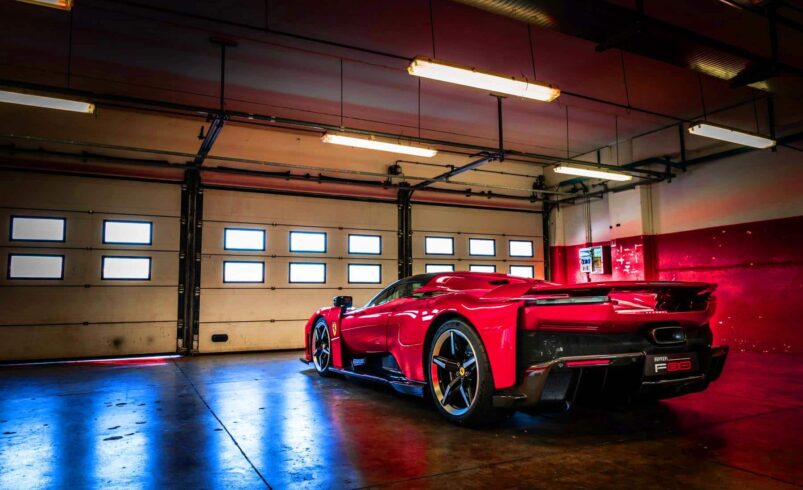
The automotive industry is no stranger to innovation, but the introduction of 3D printing for structural components in road cars marks a significant leap forward. Ferrari’s F80 has become the first road vehicle from the brand to incorporate 3D-printed upper suspension triangles. This technological advancement promises not only enhanced design flexibility but also remarkable weight reduction. As the industry gradually shifts towards additive manufacturing, this development could redefine performance benchmarks for luxury sports cars.
The Role of 3D-Printed Suspension Components
The design of mechanical components is often restricted by traditional manufacturing methods. Conventional processes like casting and machining impose significant limitations on shape and structure. Casting requires parts that can be demolded, while machining necessitates access for tools. However, 3D printing, also known as additive manufacturing, frees designers from these constraints, allowing complex shapes that optimize material usage.
In the case of Ferrari’s F80, the upper suspension triangles benefit from what’s known as “topological optimization.” This method involves creating structures that use material only where necessary to withstand mechanical stresses. As a result, the components can feature complex shapes, such as hollow structures with thin walls or even honeycomb patterns, leading to substantial weight reductions. The lightening effect can be dramatic, often ranging from 20 to 50 percent based on the specific application.
How The Additive Manufacturing Process Works
The most commonly used additive manufacturing technique in mechanical construction is “laser powder bed fusion.” This process begins with a thin layer of metal powder, typically an aluminum-titanium alloy, spread in a container. A laser then melts the powder according to a predetermined pattern, forming the first layer of the component. The process is repeated, layer by layer, until the entire part is constructed.
The number of layers correlates with the height of the component, meaning larger parts may take several days to complete. Once the printing is finished, the excess powder is removed to reveal the part. Further treatments, such as surface finishing and machining, are applied to prepare areas for mounting bearings and joints, making the component ready for installation in the vehicle.
Is The Industry Pushing Limits Too Far?
3D printing is not without its drawbacks. It can be a time-consuming and costly process, especially for larger components. However, it is also highly material-efficient and does not require initial investments like mold fabrication. This makes it ideal for limited-series production, such as the 799 units of the Ferrari F80. The pursuit of maximum weight reduction can justify the high costs associated with this innovative technology.
In the case of the F80, the benefits of 3D printing align perfectly with its high-performance goals. While some may question the economic viability of such approaches, the exclusive nature of supercars often allows for the inclusion of cutting-edge technologies that might not yet be feasible for mass-market vehicles.
Sport Auto’s Perspective on 3D Printing in Supercars
3D printing has already made its mark in motorsport, and it’s now expanding into the supercar segment. Following Ferrari’s lead with the F80, other high-end manufacturers like McLaren and Bugatti are expected to adopt this technology. The potential for significant reductions in unsprung mass makes it especially appealing for ultra-high-performance vehicles.
As the technology becomes more refined and cost-effective, it may even trickle down to more mainstream models. However, for now, it remains a hallmark of exclusivity and cutting-edge engineering, reserved for vehicles at the pinnacle of automotive innovation.
3D printing in automotive manufacturing represents a significant shift in how vehicles are designed and built. While currently limited to high-end applications, the potential for broader adoption is immense. As the technology advances, will we see a future where 3D-printed components become the norm across the entire industry?
This article is based on verified sources and supported by editorial technologies.
Did you like it? 4.7/5 (29)
First Appeared on
Source link